

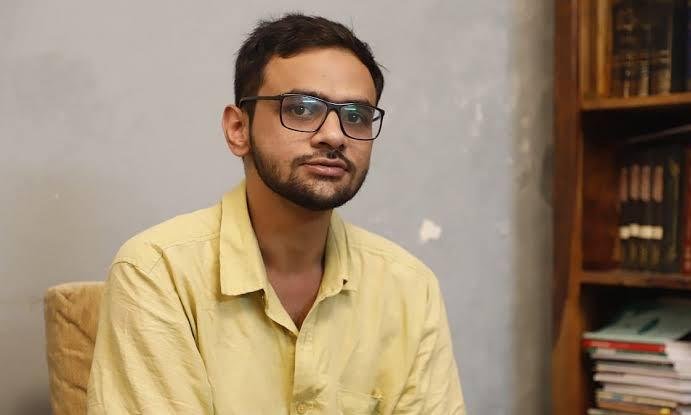
The Delhi High Court on Friday stepped forward in the ongoing case against activist Umar Khalid, requesting the stand of the Delhi Police on his bail application filed under the Unlawful Activities (Prevention) Act (UAPA). This plea relates to the investigation concerning the ‘larger conspiracy’ behind the February 2020 riots in North-East Delhi that saw the tragic death of 53 individuals and left over 700 injured.
Justice Prathiba M Singh and Justice Vikas Mahajan issued a notice to the Delhi Police, mandating a response within two weeks. This marks a critical point in Khalid’s case as it represents his third attempt to secure bail since his arrest in September 2020.
Khalid’s counsel emphasized the urgency of the situation, stating they were also seeking interim bail. The bench confirmed it would hear the bail plea on August 27, coinciding with the plea of co-accused, Sharjeel Imam.
He challenges a trial court’s ruling from July 4 that dismissed his previous bail application. Additional Solicitor General S V Raju, representing the Delhi Police, noted that Imam’s bail plea had met a similar fate under the same trial court’s order. This could facilitate a combined hearing for both cases.
Central to this ongoing legal saga, Khalid faces serious allegations of being a mastermind behind the riots as part of a broader conspiracy protesting the Citizenship (Amendment) Act (CAA) and the National Register of Citizens (NRC). His fellow activists – including Imam, Khalid Saifi, and former AAP councillor Tahir Hussain – also find themselves implicated in the larger conspiracy, which is actively being investigated by the Delhi Police’s Special Cell.
In its July ruling, the trial court expressed it had ‘no option but to follow’ the Supreme Court’s directive issued on January 5, interpreting this as a constraint on entertaining his plea.
Prior to this, on September 2, 2025, a division bench of the Delhi High Court denied Khalid bail, a decision subsequently upheld by the Supreme Court in January 2026. The top court, however, allowed bail to other co-accused individuals, signaling a nuanced understanding of participation levels in the alleged conspiracy.
Justices Aravind Kumar and N V Anjaria noted there exists a prima facie case against both Khalid and Imam under the provisions of the UAPA. They emphasized that not all accused could face equal treatment given the evident ‘hierarchy of participation’ in the alleged events.
This ongoing judicial scrutiny around Khalid highlights the complexity of legal interpretations regarding allegations tied to political dissent and civil rights activism. The Delhi High Court’s upcoming hearing on August 27 stands as a crucial juncture in Khalid’s fight for bail amidst broader implications concerning freedom of speech and activism in India.