

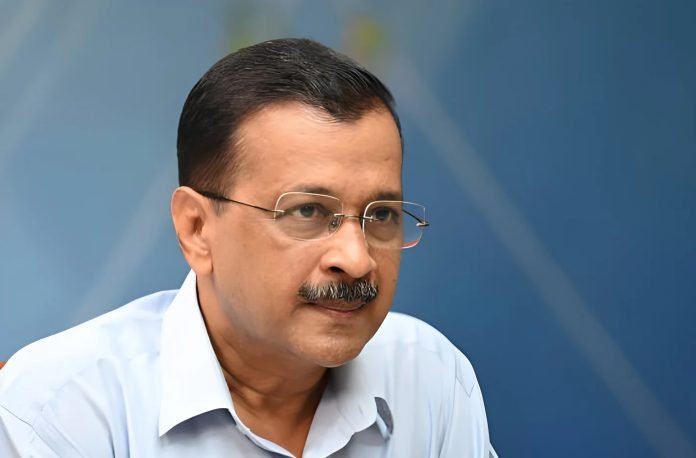
The Delhi High Court has taken a vital step in the ongoing legal battle involving Aam Aadmi Party (AAP) chief Arvind Kejriwal. On Wednesday, the court issued a fresh notice to Kejriwal following pleas by the Enforcement Directorate (ED) that challenge his acquittal in two separate summons cases.
Justice Swarana Kanta Sharma presided over the proceedings and learned that the original notice dated April 1 had not been served to the former chief minister. The ED’s counsel illuminated the court on the situation, stating that no legal representation had appeared on behalf of Kejriwal.
“The registry reports that the respondent has not been served. I will issue a fresh notice,” asserted the judge, who subsequently scheduled the matter for hearing on July 22.
The genesis of this emerging legal situation traces back to allegations made against Kejriwal concerning his failure to appear before the ED despite multiple summonses linked to the excise policy case. The ED contends that the AAP chief intentionally disobeyed these summonses and was evasive in his responses.
During prior proceedings, the ED’s counsel noted that the trial court had made a significant error by acquitting Kejriwal. They emphasized that it was undisputed that the summons had been duly issued and acknowledged, yet Kejriwal did not comply. The court’s earlier ruling on January 22 indicated that the ED failed to satisfy the burden of proof regarding intentional disobedience.
The trial court criticized the ED’s inability to adequately substantiate that the summons were served legally. It stated, “Neither the service of summons through emails has been proved by the ED nor has the process of issuing summons to any person under Section 50(2) of the Prevention of Money Laundering Act (PMLA) via email been established to adhere to legal standards.”
Additionally, the ED has alleged that Kejriwal communicated with other accused individuals involved in the case, who reportedly formulated a now-revoked excise policy. This policy allegedly resulted in unjust benefits for specific individuals and kickbacks intended for the AAP.
Currently, Kejriwal remains on interim bail in the money laundering case. The Supreme Court of India has deferred discussions surrounding the necessity of his arrest under the PMLA to a larger bench, indicating that a deeper examination of the matter is upcoming.
Earlier in the year, the trial court discharged Kejriwal, his deputy Manish Sisodia, and 21 other individuals involved in the liquor policy case. The court concluded that the Central Bureau of Investigation (CBI) case lacked substantial merit and failed to withstand judicial scrutiny.
The CBI’s appeal against this discharge is pending before the high court and adds another layer of complexity to an already intricate legal scenario.