

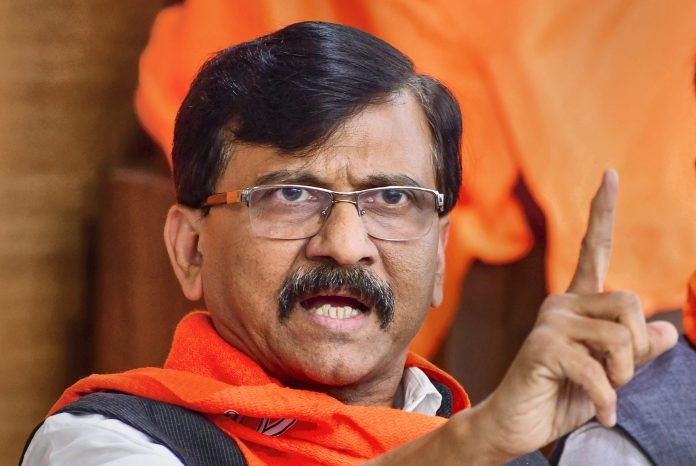
Shiv Sena (UBT) leader and Rajya Sabha MP Sanjay Raut criticized ruling parties in Maharashtra on Saturday for failing to appoint Leaders of the Opposition (LoP) in the state legislature. He warned that this absence weakens democracy and violates constitutional processes.
Speaking to reporters, Raut expressed concern about the lack of a Leader of the Opposition in both Houses of the Maharashtra legislature. He stated, “It is a democratic necessity to have a Leader of Opposition in municipal corporations, state assemblies, and Parliament. It is also a constitutional requirement.” His remarks highlight a critical gap in Maharashtra’s political structure.
Raut accused the ruling parties of deliberately obstructing the appointment of LoPs through “systematic electoral manipulation and political pressure” over the past decade. He asserted, “The BJP has consistently tried to weaken and insult the institution of the Leader of Opposition. Legislative business is conducted without an LoP, clearly showing the ruling parties’ fear of the position.” This situation raises questions about the commitment to democratic principles in Maharashtra.
He referred to Maharashtra’s historic tradition of appointing Leaders of the Opposition, noting that even smaller opposition parties received the designation in the past. Raut stated, “Even when the BJP did not have sufficient numbers in Parliament, it was still granted the LoP position. This tradition is now being deliberately dismantled.” Such statements indicate concern over a potential decline in democratic norms.
The opposition continues to demand the appointment of Leaders of Opposition in both Houses of the Maharashtra legislature. Shiv Sena (UBT) nominated Bhaskar Jadhav for the Legislative Assembly, while the Congress party proposed Satej Patil for the Legislative Council. Their push reflects a larger fight for representation and accountability in governance.
In addition to the LoP issue, Raut condemned Revenue Minister Chandrashekhar Bawankule for suggesting discussions on creating a separate Vidarbha state. Raut interpreted these remarks as part of a broader plan supported by Chief Minister Devendra Fadnavis. He declared, “Shiv Sena (UBT) will strongly oppose any attempt to divide Maharashtra. The state’s unity is non-negotiable.” This political stance underscores the complexities of regional identity and governance in Maharashtra.
Raut also referenced a recent debate in Parliament surrounding Vande Mataram, where he noted that the ruling BJP seemed shaken by the contributions of Lok Sabha Leader of Opposition Rahul Gandhi and Congress leader Priyanka Gandhi Vadra. He remarked, “There was visible enthusiasm in the debate because of Rahul Gandhi and Priyanka Gandhi Vadra. It reinforced the belief that democracy is alive. The debate exposed the BJP and its affiliated organisations.” This observation emphasizes the ongoing vitality of opposition voices in the Indian political landscape.
Furthermore, Raut advocated for a discussion on the Maharashtra Geet in the state legislature. He believes that such a dialogue would initiate a meaningful conversation about the contributions of various leaders and movements to the formation of Maharashtra and Mumbai. In a time when political narratives remain contentious, Raut’s suggestions reflect a desire for inclusivity and respect for Maharashtra’s history.