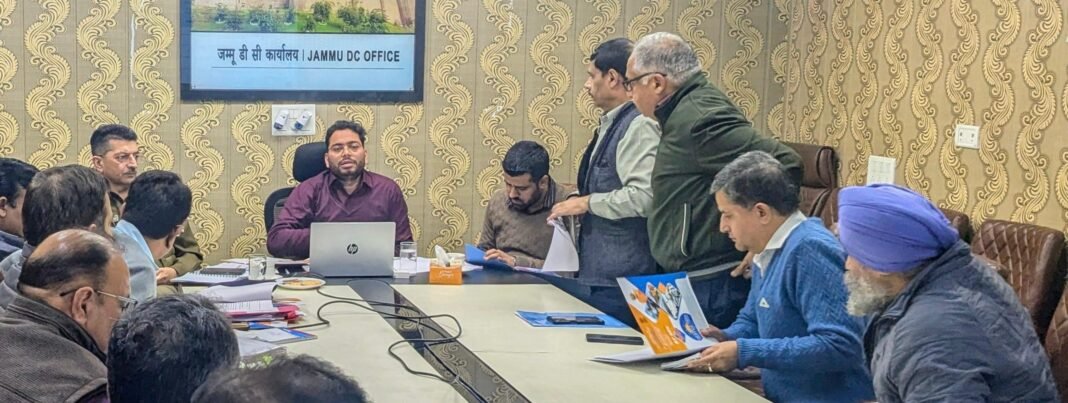


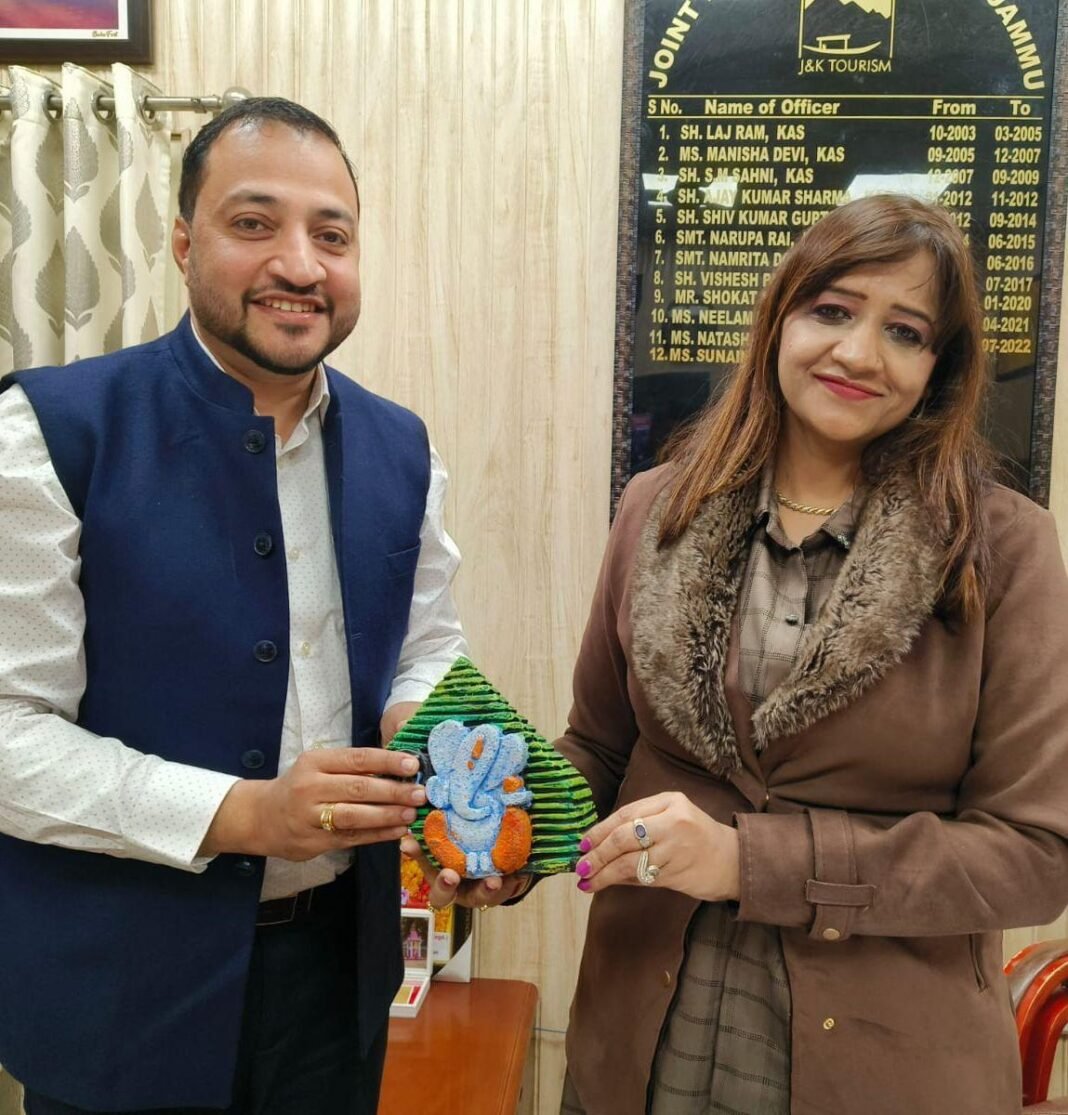
Nitish Mahajan, Co-incharge of the Social Media Department of Jammu and Kashmir BJP, held a productive meeting with Sunaina Mehta, Deputy Director of Tourism Jammu, today to discuss strategies for positioning Jammu as a standalone tourist destination. The discussion centered on leveraging the region’s vast cultural, religious, and natural heritage to attract both domestic and international visitors.
Promoting Jammu’s Religious Tourism Circuit
During the meeting, Nitish Mahajan emphasized the untapped potential of Jammu’s religious tourism circuit, which boasts a rich collection of spiritual sites that can draw pilgrims and tourists alike. He pointed out iconic temples and shrines such as Bawe Wali Mata Temple, Shree Raghunath Ji Temple, Tirupati Balaji Temple, Purmandal Utter Behni Shrines, Shiv Khori, and the Buddha Amarnath Yatra. He also highlighted the Machail Mata Yatra, Kol Kandoli Temple in Nagrota, Deva Mai Temple near Katra, and many other religious landmarks that are integral to Jammu’s spiritual identity.
Mahajan stressed that these religious sites not only have significant cultural and historical value but also offer immense opportunities for tourism. He suggested that promoting these destinations together as a holistic religious tourism circuit could attract a wider audience, boosting footfall and increasing economic opportunities for local communities.
Enhancing Jammu’s Tourist Infrastructure
In addition to religious tourism, Mahajan proposed the enhancement of key attractions in the region to make Jammu more appealing to tourists. He highlighted the Bahu Fort Ropeway, a popular tourist spot that offers breathtaking views of the city and surrounding landscapes. He advocated for the promotion of the Beating Retreat Ceremony, a unique event that showcases Jammu’s cultural heritage and could be further publicized to attract tourists, especially during the winter months when the ceremony garners heightened attention.
Leveraging Cultural Heritage and Natural Beauty
Mahajan also pointed out that Jammu’s diverse cultural heritage and natural beauty are underutilized assets in attracting tourists. From the scenic Patnitop and Sanasar to the pristine beauty of Mansar Lake and the Shivalik hills, the region has the potential to appeal to adventure seekers, nature lovers, and cultural tourists alike.
He emphasized the importance of creating a comprehensive marketing strategy that not only showcases Jammu as a religious hub but also promotes its eco-tourism, adventure tourism, and cultural festivals. He further suggested collaborating with influencers, travel bloggers, and tour operators to increase the region’s visibility on global platforms.
Collaboration for Sustainable Growth
Both Mahajan and Mehta agreed on the importance of public-private collaboration to drive growth in Jammu’s tourism sector. They discussed the need for sustainable development practices, ensuring that tourism growth does not harm the region’s cultural heritage or natural environment. Mahajan also stressed the importance of infrastructure improvements, including better road connectivity, hospitality services, and tourist-friendly amenities.
Looking Forward
As Jammu continues to build its identity as a tourist destination, the meeting between Nitish Mahajan and Sunaina Mehta marks a significant step toward integrating the region’s rich heritage and natural beauty into a unified tourism strategy. With both leaders committed to promoting Jammu as a standalone tourism hub, the future looks promising for the region’s travel and hospitality sectors.
By highlighting religious, cultural, and natural attractions, Jammu has the potential to become a must-visit destination for tourists worldwide.