


The crackdown is part of a broader effort to ensure that the CSCs, which serve the public in accessing government services, are adhering to the prescribed rates. With growing complaints about excessive charges, the J&K administration is taking robust steps to enforce a monitoring and regulatory framework that safeguards the interests of the common masses.
Regular Audits and Inspections
As part of this initiative, the Information Technology Department has established dedicated Divisional Level Inspection teams. These teams are tasked with conducting surprise inspections and audits to monitor CSC operations and identify any deviations from the official rates. These inspections aim to penalize those found guilty of overcharging, ensuring that public services remain affordable and accessible to everyone.
Principal Secretary, Information Technology, Santosh Vaidya, has further emphasized the need for accountability by directing the Deputy Commissioners, who also serve as the Chairpersons of District e-Governance Societies, to ensure proper implementation of the guidelines. Their role is crucial in maintaining the integrity of the services provided by CSCs, which have become an essential part of digital governance in Jammu and Kashmir.
Public Support and Future Plans
The government’s initiative has garnered support from the public, with many citizens expressing relief that action is being taken against errant CSC operators. The authorities have also assured that any violations will be met with stern consequences, with the aim of restoring public trust in these vital service centers.
The ongoing inspections are expected to serve as a deterrent against malpractice, and the government plans to continue strengthening its oversight mechanisms. Regular audits will be part of an ongoing process to ensure that all CSCs comply with the fixed rates and continue to serve the people in a transparent and efficient manner.
The IT Department has appealed to the public to report any instances of overcharging or misconduct at local CSCs, reinforcing the importance of community vigilance in maintaining fairness and transparency in public services.
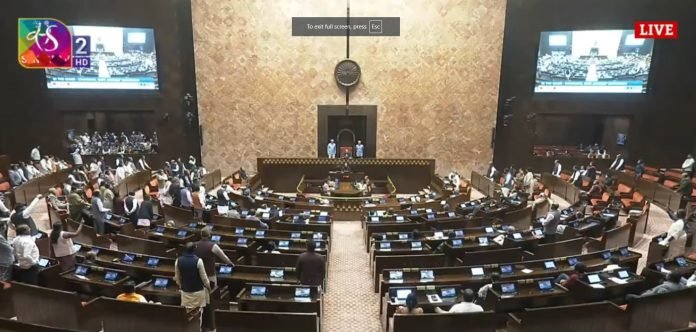
New Delhi, December 9, 2024 – The Rajya Sabha witnessed chaos on Monday as the treasury benches accused top Congress leaders of colluding with billionaire investor George Soros to destabilise India. The allegations sparked a wave of protests from the opposition, leading to multiple adjournments, including two before the lunch break.
Tensions Escalate in the House
The uproar began when BJP members raised slogans, demanding that Congress leaders address reports alleging their links with Soros. The Treasury benches accused some Congress leaders of conspiring with Soros to destabilise the country’s economy and national security. BJP leader J.P. Nadda highlighted the alleged connection between the Forum of Democratic Leaders in the Asia-Pacific (FDL-AP), which Soros supports, and some members of the Congress. Nadda raised concerns over the FDL-AP’s stance on Jammu and Kashmir, accusing it of viewing the region as a “separate entity.”
In response, Congress members, including Leader of Opposition Mallikarjun Kharge and others like Jairam Ramesh, strongly objected to the allegations. They argued that the issue had been dismissed by the Chairman earlier and was now being used to divert attention from other pressing matters, such as the Adani controversy. The opposition also raised procedural concerns, claiming the issue had been rejected by the Chairman under Rule 267, which governs urgent matters.
Opposition’s Counterclaims
Congress leaders accused the ruling party of using the issue to protect business interests, particularly those related to industrialist Adani. Pramod Tiwari of Congress accused BJP MPs of trying to create a distraction in order to shield Adani from scrutiny. BJP MP Radha Mohan Das Aggarwal, however, maintained that the issue was of national security and should be discussed in the House. He claimed that Congress was aligning with forces seeking to create instability in India.
Allegations Against Congress Leaders
The BJP MPs went further, alleging that Soros funded trips abroad for Rahul Gandhi and other Congress leaders, asserting that these connections were fueling anti-India campaigns. Brij Lal of the BJP demanded a discussion on the alleged relationship between Soros, Sonia Gandhi, and Rahul Gandhi, calling it a matter of national interest.
Opposition Defends Congress
In response, CPI(M) leaders like Bikash Ranjan Bhattacharya and John Brittas claimed that the BJP’s focus on Soros was an attempt to cover up the government’s failures, particularly regarding its handling of the Adani issue. They argued that the entire disruption was part of a deliberate effort to divert attention from the government’s shortcomings.
House Adjourned Amidst Chaos
Amid the din, Chairman Jagdeep Dhankhar repeatedly called for order, but the proceedings continued to be disrupted, leading to three adjournments, including one until 3 pm. Earlier, BJP MP Laxmikant Bajpayee had attempted to raise the issue during Zero Hour, which was objected to by Congress leaders.
The Chairman had previously rejected 11 notices under Rule 267, which sought to suspend the day’s agenda to discuss the matter, leading to further protests from opposition members. The tension in the House highlighted the growing rift between the ruling BJP and the Congress, with both sides accusing each other of playing politics over sensitive national issues.
Conclusion
The allegations regarding George Soros and Congress leaders, along with the ongoing disruptions in the Rajya Sabha, underscored the deepening political divisions in India. With the Chairman’s repeated attempts to restore order failing, the House’s proceedings were stalled, and the issue remains unresolved.